Aviation accident litigation is not simply a personal injury case involving an aircraft. Plane and helicopter crashes can involve highly technical evidence, federal safety rules, multiple responsible parties, and a parallel National Transportation Safety Board investigation that may take months or years to complete. Families need an attorney who can understand both the legal stakes and the operational realities of flight from the earliest stages of the case.
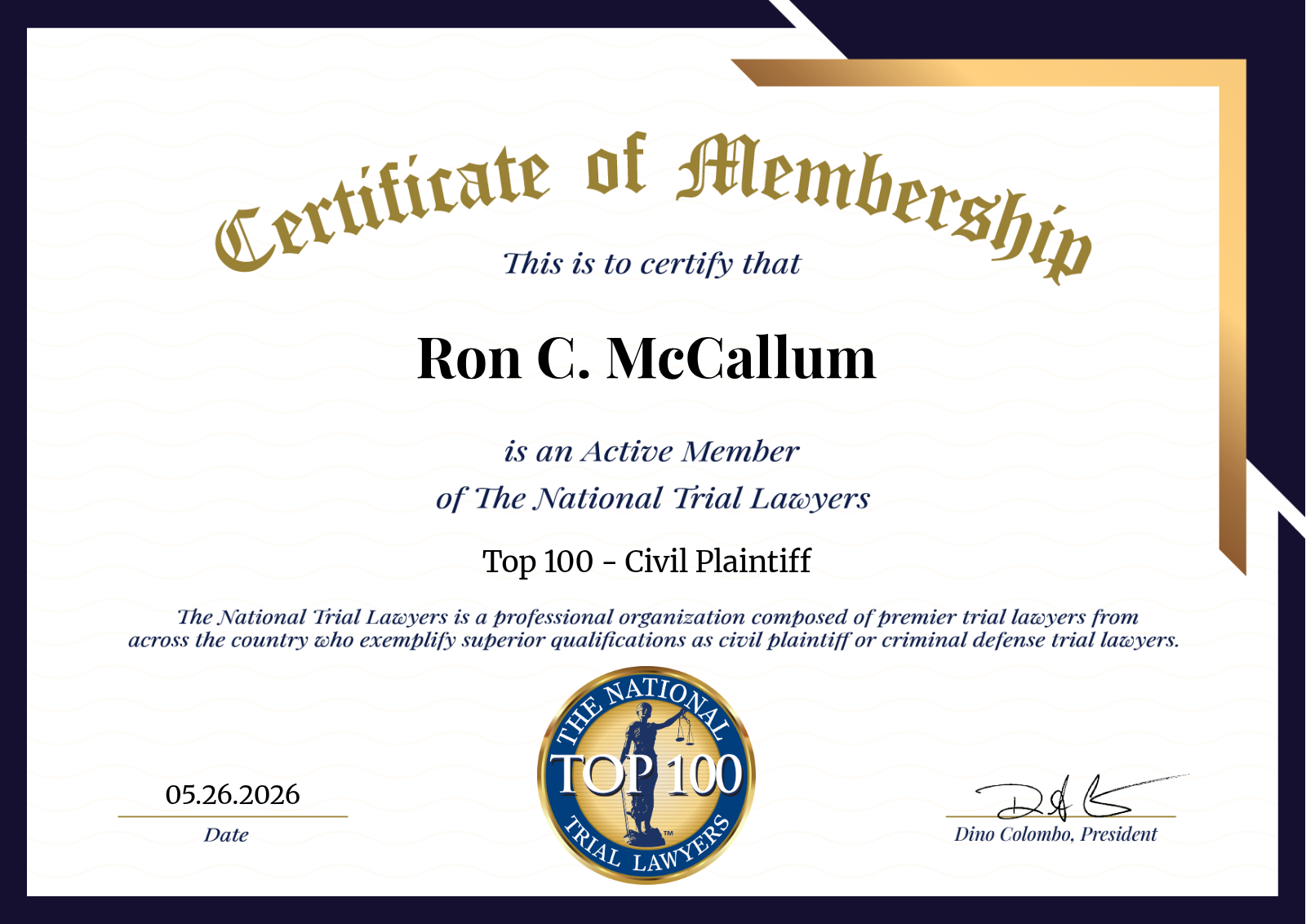
At McCallum Law Firm in Dallas, TX, Ron McCallum brings a rare combination of trial experience and aviation knowledge to aviation injury and wrongful death cases. Ron is an ATP-rated pilot with 32 years of flight experience as a charter captain, certified flight instructor (CFI), and chief pilot—experience that helps our firm evaluate aviation evidence, terminology, procedures, and safety decisions with an informed perspective.
Aviation Cases Begin With a Different Investigation
After a serious aircraft accident, the NTSB typically takes the lead in determining the facts, conditions, and probable cause of the crash. The investigation may include on-scene documentation, witness interviews, weather analysis, maintenance-record review, air traffic control information, pilot qualifications, and aircraft-performance evidence. In many general aviation cases, an initial preliminary report may be released within weeks, but the final report and probable-cause finding can take approximately 12 to 24 months.
That timeline matters. An injured passenger or grieving family cannot simply wait for every agency finding before protecting their civil claim. While the NTSB investigation can produce valuable factual material, the agency’s mission is transportation safety—not recovering compensation for victims. A Texas aviation accident lawyer must independently preserve evidence, identify responsible parties, retain appropriate experts, and build a case while the technical investigation unfolds.
Federal investigators may also designate manufacturers, operators, maintenance organizations, and other technical entities as parties to the investigation. Attorneys representing injured people are not NTSB parties. That makes it especially important to have counsel prepared to pursue evidence through the civil process and to carefully assess information as it becomes available.
FAA Regulations Can Define the Standard of Care
Aircraft operations are governed by an extensive federal regulatory framework. Depending on the flight, the applicable rules may involve pilot certification, aircraft airworthiness, maintenance, weather minimums, flight planning, crew-duty requirements, training, drug and alcohol testing, dispatch procedures, operational control, and emergency procedures.
Aviation cases often turn on the details. Was the aircraft properly maintained? Did the pilot have the required qualifications and recent experience? Was the flight conducted under the correct operating rules? Did an operator follow its manuals and training requirements? Were weight-and-balance limits, fuel requirements, or weather restrictions ignored?
These questions require more than a general understanding that “someone was negligent.” They require a lawyer and expert team that can recognize the aviation records that matter, understand why they matter, and connect technical failures to the injuries or loss suffered by the client.
Flight Data and Cockpit Voice Evidence May Be Crucial
In airline and many commercial operations, flight data recorders and cockpit voice recorders may provide essential evidence about what occurred before an accident. Flight data can reveal information such as altitude, airspeed, heading, aircraft configuration, engine performance, and control inputs. Cockpit voice recordings may help establish communications, warnings, crew coordination, workload, and decision-making in the cockpit.
But not every aircraft is equipped with the same recording technology. Smaller private aircraft may have limited data sources, and recorder information can be overwritten or require prompt preservation. Other important evidence may include GPS devices, avionics downloads, engine-monitor data, maintenance logs, electronic flight bag records, dispatch communications, surveillance video, cell-phone data, and radar information.
Our Dallas trial lawyers understand that aviation evidence must be identified quickly. A delayed investigation can make it harder to locate records, evaluate the wreckage, or determine whether a mechanical defect, maintenance failure, pilot error, weather issue, or operational breakdown contributed to the crash.
Liability Changes With the Type of Aircraft Operation
There is no one-size-fits-all aviation accident claim. The potential defendants and legal theories can vary substantially based on the type of flight involved.
- Private aircraft: Claims may involve the pilot, aircraft owner, maintenance provider, flight school, airport operator, or a manufacturer of defective aircraft components.
- Commercial airlines: Airline cases can involve carrier procedures, crew training, maintenance, dispatch, operational control, and federal aviation requirements. They may also require careful analysis of ticketing, passenger rights, and insurance issues.
- Charter operations: Charter and air-taxi flights can present questions about the operator’s certificate, pilot experience, maintenance practices, flight-following, weather decisions, and compliance with applicable operating rules.
- Helicopters: Helicopter crashes often involve unique operational hazards, including low-level flight, wire strikes, confined-area operations, autorotation issues, rotor-system maintenance, and specialized training requirements.
Dallas is home to major aviation activity around DFW International Airport and Dallas Love Field, along with extensive private, corporate, charter, and helicopter operations throughout North Texas. Whether an accident occurs near a major airport, at a rural airstrip, or during an out-of-state flight, McCallum Law Firm can investigate the operation and pursue accountability for those harmed.
Why Aviation Experience Matters When Choosing Counsel
When choosing an aviation injury lawyer in Texas, families should ask specific questions: Does the attorney understand pilot training and aircraft operations? Can the firm work effectively with aviation experts? Does counsel know how to evaluate flight records, maintenance documentation, and federal regulations? Has the attorney handled complex, high-stakes injury or wrongful death litigation?
Ron McCallum’s aviation background offers meaningful, verifiable qualifications for clients evaluating counsel. His ATP rating and decades of experience as a charter captain, CFI, and chief pilot provide firsthand familiarity with the responsibilities pilots and operators carry before every flight. Ron is also a member of the Lawyer-Pilots Bar Association and an AOPA panel attorney—professional distinctions that reflect his connection to the aviation community and aviation legal matters.
That perspective does not replace a thorough investigation or qualified expert testimony. It does, however, help McCallum Law Firm ask informed questions early, communicate clearly with technical professionals, and recognize issues that might otherwise be overlooked in a catastrophic aviation case.
Protecting Your Family After an Aviation Accident
After a plane crash or helicopter accident, the legal process can feel overwhelming. Insurance carriers, operators, manufacturers, and other companies may begin protecting their own interests immediately. You deserve an advocate prepared to protect yours.
To learn more, visit our Texas Aviation Accident Lawyer
page or read more About Ron McCallum. If you or your family has been affected by an aviation accident, call McCallum Law Firm for a free consultation at (214) 702-0555 or contact us online.
FAQ
Why is an aviation accident claim more complex than a car accident claim?
Aviation claims commonly involve federal regulations, technical aircraft systems, specialized evidence, multiple companies, and an NTSB safety investigation. Determining responsibility often requires detailed review by aviation experts and experienced trial counsel.
Should I wait for the NTSB final report before contacting a lawyer?
No. The NTSB’s final report may take 12 to 24 months in many general aviation cases. Speaking with an attorney promptly can help preserve evidence and protect your rights while the investigation continues.
Can I bring a claim if I was a passenger on a charter flight?
Potentially. Charter accident claims may involve the pilot, charter operator, aircraft owner, maintenance provider, manufacturer, or other parties. The specific facts and applicable regulations will determine available claims.
What types of damages may be available after a fatal aviation accident?
Eligible family members may be able to pursue damages for medical expenses, funeral costs, lost financial support, loss of companionship, mental anguish, and other losses recognized under applicable law.
What should I look for in a Texas aviation accident lawyer?
Look for trial experience, a record of handling catastrophic injury and wrongful death cases, access to qualified aviation experts, and meaningful familiarity with aircraft operations and aviation regulations.